

Stop digital gender violence
For 25N, the International Day for the Elimination of Violence Against Women, we’re focusing on a type of gender violence that unfortunately affects more and more women of any age and condition: digital violence. The violation of intimacy in mobile phones, anonymity, the potential to go viral on social media and the proliferation of fake content generated by artificial intelligence are just some of the factors that make cyberharassment a problem of the highest order.
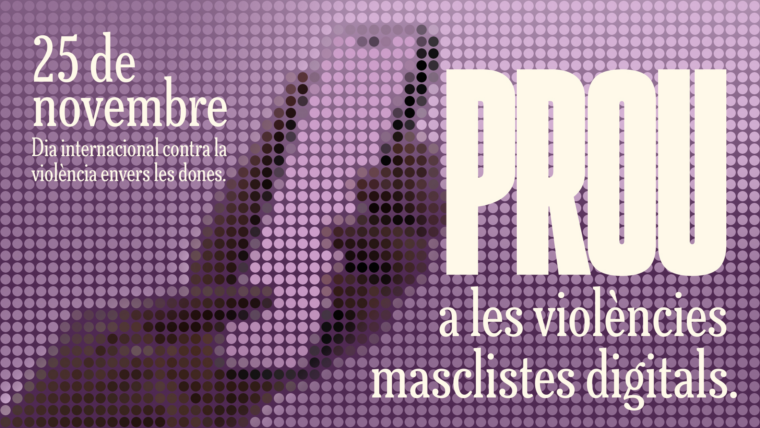
Digital gender violence has the same roots as sexist violence had before the arrival of the internet, but the channels people use facilitate and amplify it.
The patterns of violence based on sexist attitudes shift to the digital environment in the form of sexual and psychological harassment, abuse and aggression, taking advantage of the immediate and ubiquitous nature of the means used, making it particularly serious and often difficult to detect.
These types of violence have a profound impact on people’s mental health, security, reputation, professional lives and rights such as freedom of expression and public participation. The most common forms include insults, non-consensual access to accounts, manipulation of data, harassment, digital stalking and threats.
Cyberviolence is often combined with physical or psychological violence and the lack of proof, the anonymity of the aggressor and institutional distrust make it difficult to denounce.
Given these types of aggression, and faced with any form of gender violence, specialised services with professional teams and resources are available that can help you to identify violence and tackle it with support and guidance.
Forms of digital gender violence
Here are some specific examples of what forms digital gender violence can take:
- Unauthorised access or control of women’s devices or accounts.
- Non-consensual manipulation, dissemination or scorn for women’s images or videos on social media, internet or other means of communication, also taking into account the universe of AI and fake images of women or minors from a sexist perspective.
- Impersonation or theft of identity.
- Insults, harassment, extortion, threats and the sexual exploitation of images of women.
- Attacks or piracy of activist accounts or feminist websites, plus hate speech.
Cyberharassment in figures
On a European and national level, 11% of women and children in the European Union have suffered cyberharassment (FRA, 2014) and in Spain, 15.2% of women over the age of 16 have received obscene messages or threats (macro survey on violence against women, 2019).
According to the study Les ciberviolències masclistes” (Antígona – UAB and Donestech, 2019), in Catalonia 88% of women surveyed did not denounce the cyberviolence they suffered.
In addition, the survey conducted by the Government of Catalonia on gender violence in Catalonia, gives figures such as:
- 28% of Catalan women have suffered digital violence from partners or former partners.
- 90% of cases of violence in the sexual and affective sphere include some sort of virtual aggression.
- 80% of young people have suffered aggressions on social media, and more than half have seen their photos shared without their consent.
According to municipal data, 56.8% of women living in Barcelona have suffered sexual harassment or aggression in the social and family sphere since the age of 15, and of these women, 26.4% have suffered cyberharassment.